Securing a professional pest control service Jacksonville homeowners rely on resolves immediate indoor biological hazards and establishes lasting perimeter protection against regional pest migration. Duval County properties face constant pest pressures due to coastal humidity, river floodplains, and sub-tropical temperature cycles that accelerate insect metabolism year-round.
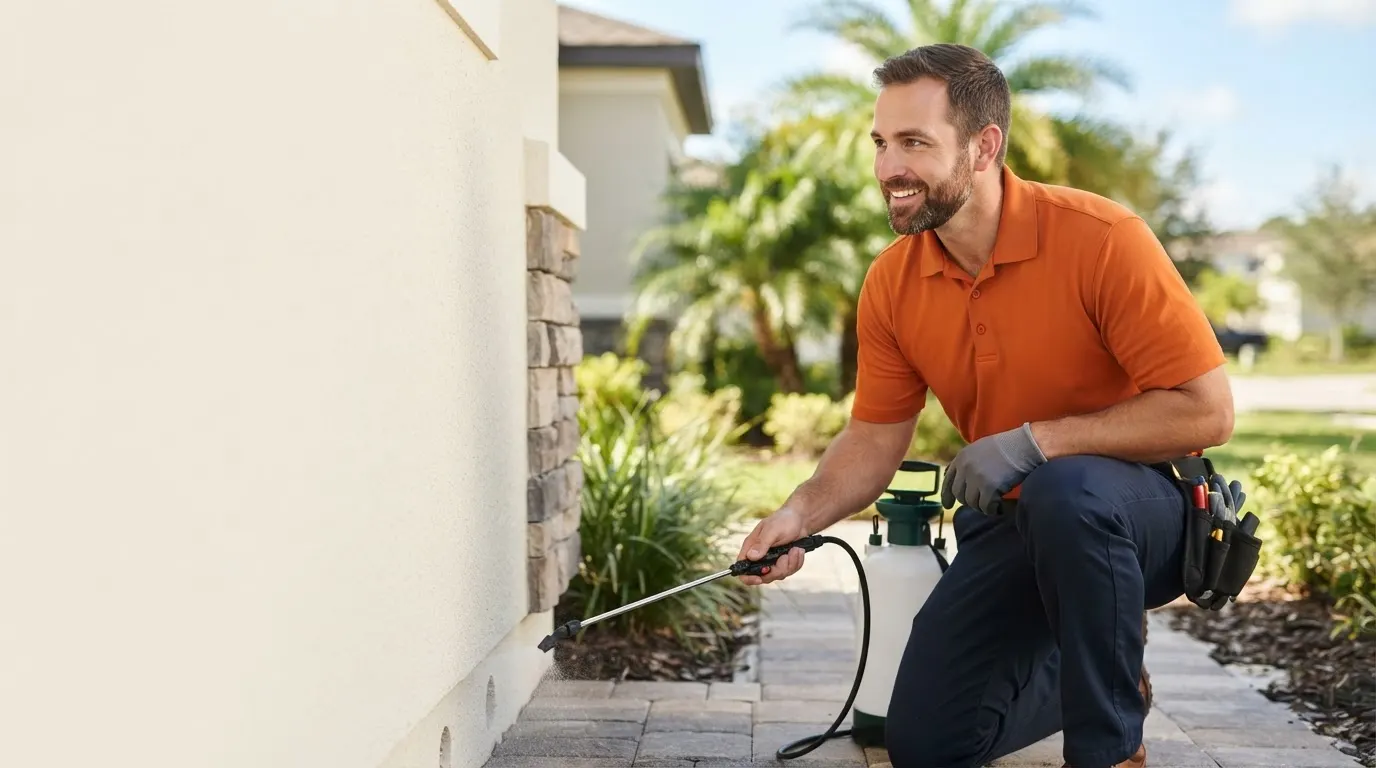
ClearWay Pest Control in Jacksonville is a residential and commercial pest control service that diagnoses, eliminates, and monitors invasive insect and vertebrate populations threatening Northeast Florida structures.
Every service reflects the same meticulous attention to detail, whether it's a single job or a larger pest control sevice project across Jacksonville.
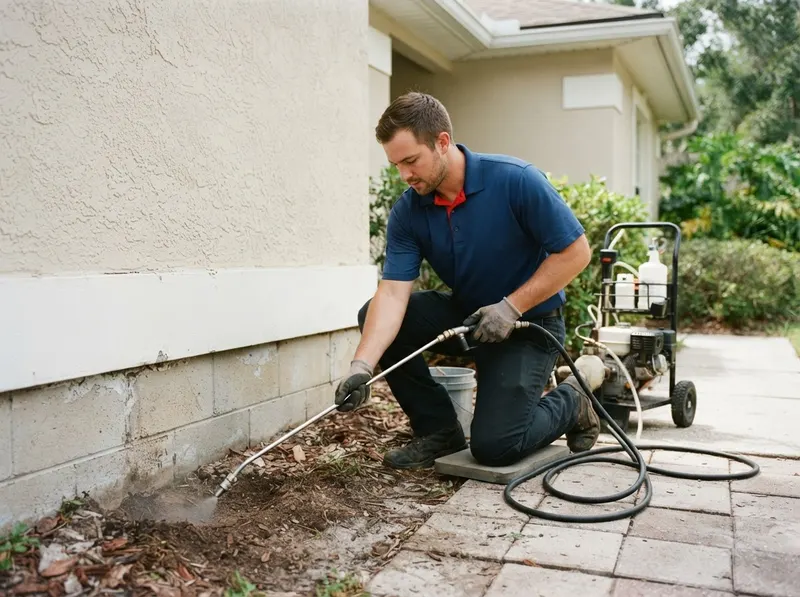
Subterranean termite defense isolates foundation footings with liquid non-repellent termiticide barriers and targeted sub-slab injections. High-moisture soils near the St. Johns River drive native subterranean and invasive Formosan colonies to forage through plumbing penetrations and exterior stucco weep screeds. Technicians dig six-inch trenches alongside exterior masonry, injecting continuous protective bands that foraging workers pass through and share back to eliminate the central colony. For structures built over monolithic concrete slabs, rod injections deliver termiticide beneath adjoining patios, expansion joints, and garage aprons where hidden entry channels commonly develop. In historic pier-and-beam crawl spaces, technicians trench around each individual brick or concrete support pier, securing the damp earth beneath floor joists where subterranean termites construct shelter tubes away from direct sunlight. Continuous protection requires applying 4 gallons of mixed finished emulsion per 10 linear feet per foot of depth, saturating the subterranean substrate to prevent future termite reconvergence.
Get a quote →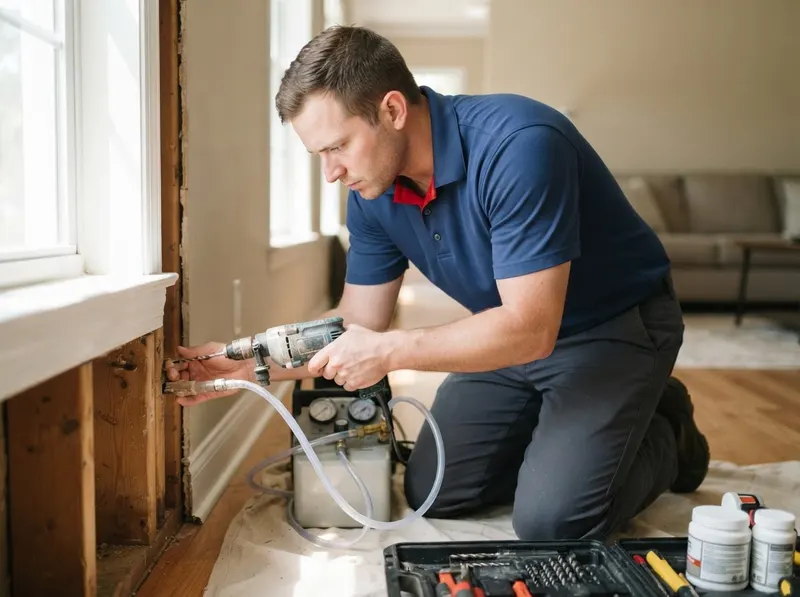
Drywood termite mitigation halts localized infestations of Cryptotermes brevis and Incisitermes snyderi without requiring immediate whole-structure fumigation when colony margins remain restricted to isolated architectural assemblies. Technicians conduct detailed acoustic sounding and fiber-optic inspections to locate active galleries, kick-out holes, and fecal frass accumulations inside exposed rafters, window frames, door jambs, and built-in cabinetry. Pressurized micro-injection equipment introduces non-repellent liquid termiticides, expanding aerosol foams, or penetrating disodium octaborate tetrahydrate (borate) salts directly into the excavated internal wood chambers. This process coats interior gallery walls, eliminating feeding workers and reproductive alates upon contact while saturating the adjacent timber matrix against reinfestation. Spot interventions preserve historical woodwork across older Jacksonville residences while halting structural wood degradation before damage spreads into primary load-bearing ceiling joists and wall studs.
Get a quote →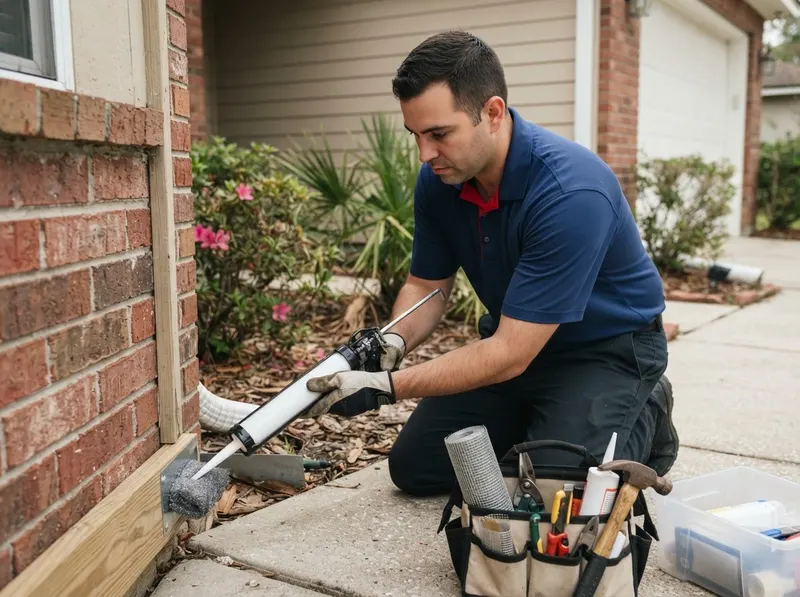
Rodent exclusion terminates indoor roof rat and house mouse ingress by sealing entry points across roof intersections, ridge vents, soffits, and crawl space access panels. Technicians install heavy 18-gauge steel mesh and structural sealants across openings larger than one-quarter inch. Interior attic traplines remove existing nesting rodents over a 14-day monitoring sequence, preventing nesting activity, insulation contamination, and chewed electrical wiring. Technicians examine plumbing roof flashings, AC line chases, fascia corners, and gable louvers, fastening rust-resistant galvanized hardware cloth with heavy-duty mechanical anchors that gnawing rodents cannot penetrate. By combining physical structural reinforcement with multi-point snap-trapping arrays, properties achieve definitive rodent removal without deploying hazardous anticoagulant rodenticides inside crawl spaces, attics, or exterior living zones where non-target pets and native wildlife could face secondary poisoning risks.
Get a quote →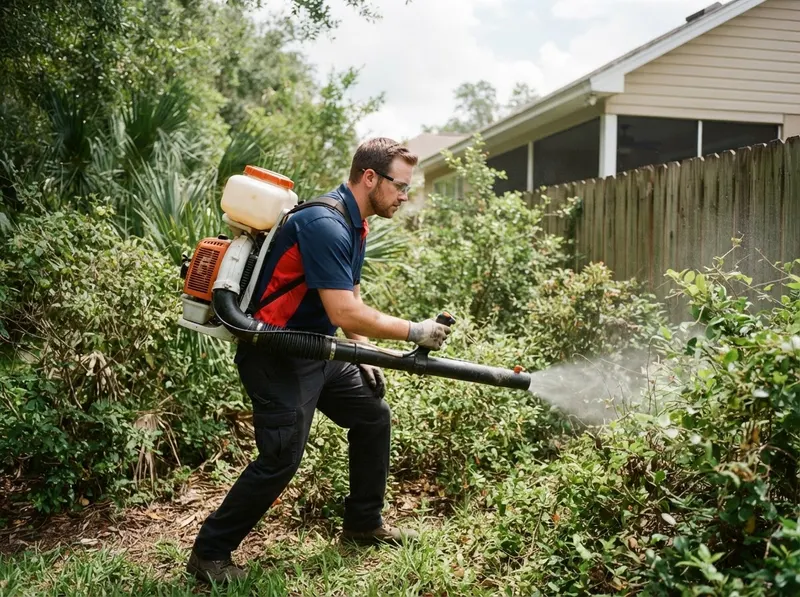
Mosquito reduction breaks the breeding cycle of Aedes and Culex varieties across damp, shaded residential acreage. Backpack mist blowers apply micro-encapsulated adulticides to shrubbery undersides, palmetto fronds, and tree canopies where biting insects rest during daytime heat. Technicians treat bird baths, ornamental ponds, and poor-draining landscape swales with natural Bacillus thuringiensis israelensis (BTI) dunks to stop larvae from emerging. Applications scheduled every 21 to 30 days maintain a microscopic polymeric barrier across exterior foliage that withstands frequent afternoon downpours without washing into drainage basins. Targeting both adult resting zones and surface-water developmental niches halts the reproductive cycle of floodwater mosquitoes, giving families safe, uninterrupted access to their patios, pool decks, and outdoor recreation areas during the humid summer months.
Get a quote →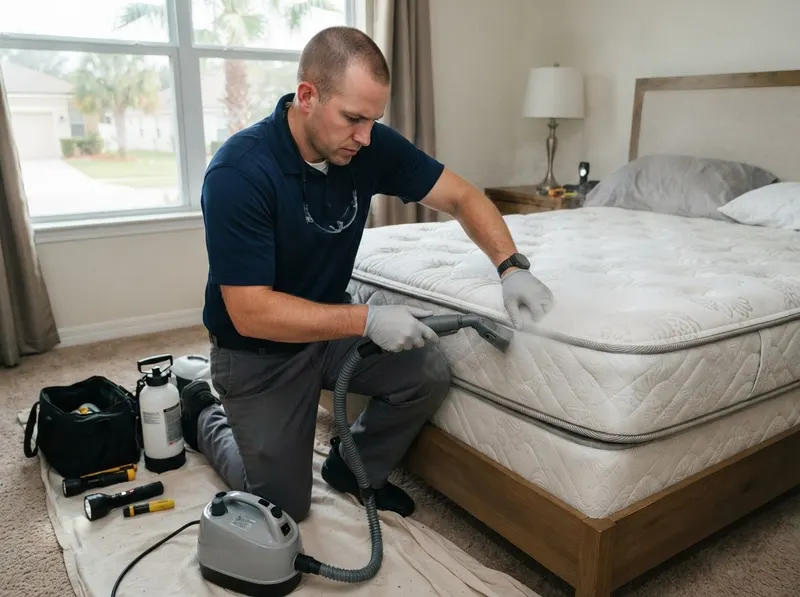
Bed bug mitigation halts Cimex lectularius infestations through meticulous room-by-room physical inspections, crack-and-crevice contact applications, and long-residual insect growth regulators (IGRs). Technicians systematically treat mattress seams, box springs, baseboard perimeters, behind picture frames, and within wall voids. This targeted multi-mode protocol eliminates biting adults and stops freshly hatched nymphs from maturing into reproductive stages. Technicians utilize specialized high-temperature steam systems along upholstered fabrics to kill temperature-sensitive eggs on contact, followed by targeted dusting of electrical outlet boxes with amorphous silica powder. This dual physical and residual treatment disrupts the insects' nocturnal feeding behavior, completely sanitizes sleeping environments, and protects residential occupants and rental property investments from recurring re-infestation cycles.
Get a quote →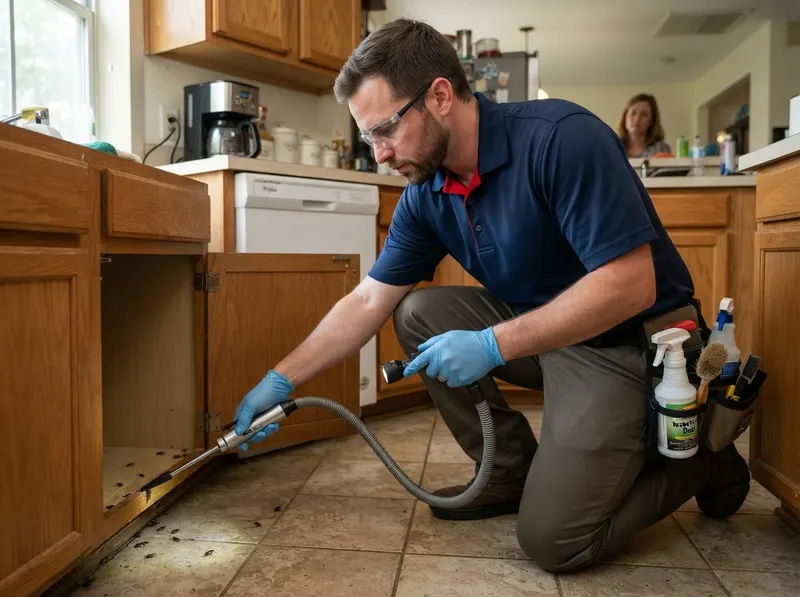
German cockroach and palmetto bug remediation eradicates indoor populations residing inside kitchen cabinetry, dishwashers, and wall hollows. Technicians introduce non-repellent insect growth regulators alongside highly palatable abiotic attractant baits, drawing insects out of electrical chases without airborne pesticide contamination in food preparation surfaces. Residual exterior barrier bands stop perimeter migration from storm drains and mulch beds. For American and smokybrown cockroaches that migrate indoors from damp pine bark landscaping and sewer lines, technicians treat perimeter weep vents and foundational thresholds with micro-encapsulated residual formulations. By eliminating the underlying feeding zones and deploying targeted moisture-resistant bait matrixes inside dark structural cavities, technicians break the reproductive egg-capsule (ootheca) production cycle, providing rapid indoor relief and restoring household sanitary conditions.
Get a quote →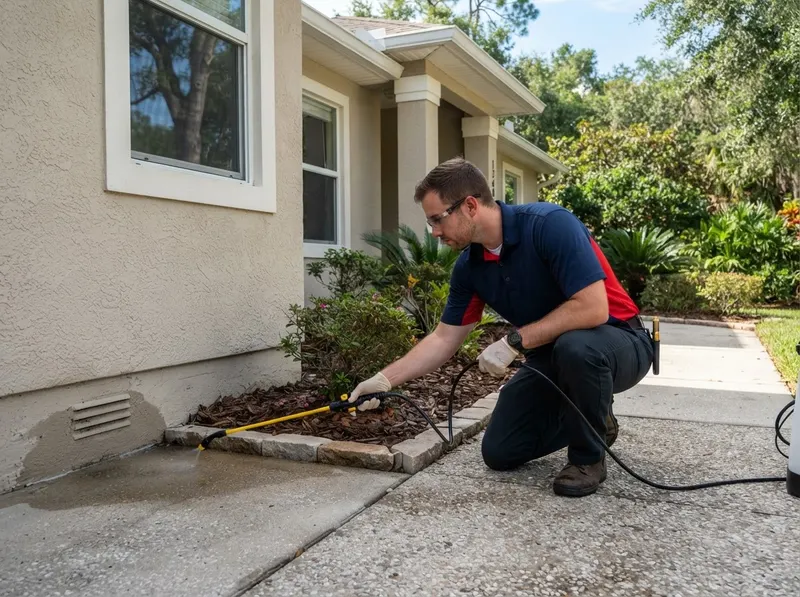
Quarterly exterior defense builds a resilient two-tier protective boundary around the entire home footprint. Technicians treat foundation stem walls three feet up and three feet out into adjacent soil, clear spider webs and mud dauber nests from eaves, and treat weep screed transitions. This approach maintains a stable barrier against silverfish, millipedes, and earwigs before they exploit doorway thresholds or window flashings. Specialized micro-encapsulated formulations bond to stucco, brick veneer, and coquina footings, creating a continuous zone of defense that resists solar degradation and heavy rain runoff. Sweeping exterior soffits and rooflines removes harborage points for predatory spiders, while granular perimeter treatments applied around ornamental flowerbeds intercept ground-crawling pests before they bridge the gap between exterior landscaping and the structure's interior envelope.
Get a quote →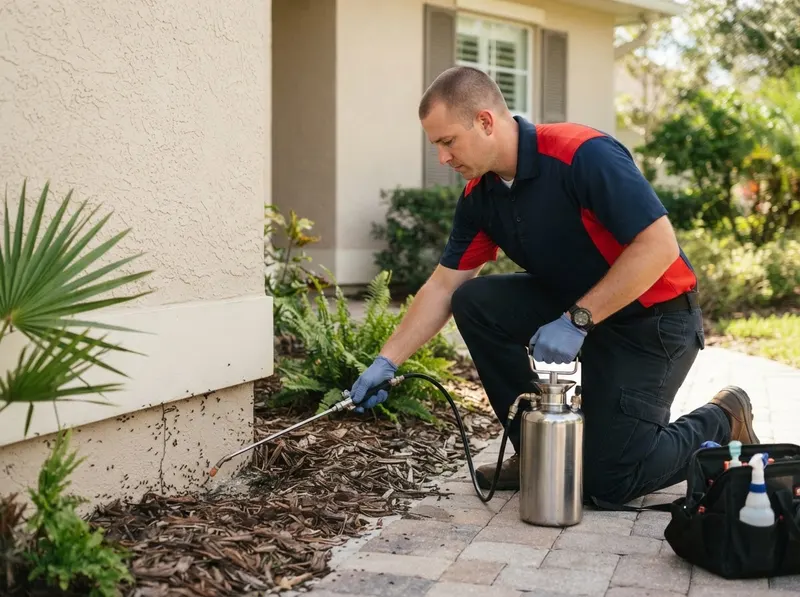
Targeted ant eradication identifies specific foraging patterns of ghost ants, white-footed ants, fire ants, and acrobat ants common to Florida sand. Because store-bought repellent sprays cause budding and spread colonies deeper into interior drywall voids, technicians utilize specialized non-repellent transfer baits. Foraging workers ingest the liquid carbohydrate bait and carry active ingredients into hidden nests, neutralizing multi-queen systems. Technicians trace foraging trails along exterior plumbing lines, electrical conduits, and window sills to deliver precisely formulated bait matrices matching seasonal dietary preferences between proteins and sugars. Exterior broadcast applications of targeted granular baits neutralize red imported fire ant mounds across residential lawns, preventing painful stings in turf areas while ensuring long-term systemic control across the entire parcel.
Get a quote →You get a firm, itemized quote for your pest control sevice before any work begins, no surprises, no pressure.
Careful prep, tidy work, and a full cleanup when we are done. We treat your home and belongings like our own.
The same trusted, background-checked team from the first call to the final check.
Selecting the proper remediation plan requires identifying the primary biological vector and the physical vulnerability of the structure. If subterranean termites threaten sill plates and framing timbers, install a continuous liquid barrier perimeter using termiticides, because spot treatments fail to intercept underground colonies foraging up through foundation cold joints; the trade-off is trenching ground beds against foundation walls versus relying on slow-acting exterior monitoring stations. If palmetto bugs, smokybrown roaches, or silverfish enter living quarters, implement a targeted interior crack-and-crevice gel treatment combined with an exterior water-resistant perimeter barrier; this arrests immediate indoor contamination, whereas exterior-only broadcast applications leave existing indoor harborages untouched.
For rodent infestations inside attic insulation, execute a whole-structure mechanical exclusion with bi-weekly snap trap clearing, as deploying rodenticide baits inside living or attic spaces risks secondary toxic exposures and unretrieved rodent mortality within wall cavities. If seasonal biting insects prevent outdoor living along shaded riverfront lawns, apply micro-encapsulated barrier mists to dense shrubbery and broadcast biological larvicide briquettes into standing surface water; the trade-off is scheduling monthly misting cycles during peak precipitation windows from June through September versus leaving landscape perimeters unprotected against aggressive daytime biting swarms. When managing wood-destroying drywood termites within attic trusses or custom cabinetry, choose targeted direct localized wood injections with pressurized liquid borate or termiticide foams if colonies remain isolated, or coordinate structural containment if widespread multiple gallery networks penetrate load-bearing framing.
If German cockroaches contaminate galley kitchens and food pantry shelving, mandate high-potency abamectin or indoxacarb baits paired with insect growth regulators instead of aerosol foggers; aerosol space sprays trigger behavioral dispersal that pushes reproductive females deep into adjoining bedroom partitions, whereas systemic gel formulations exploit social foraging habits to eradicate the primary harborage cluster within ten to fourteen days.
Every project gets a firm, written price after a free on-site visit. Ranges below for orientation.
Tell us about your pest control sevice job and we'll send a clear, written quote, usually the same day. Or just call and talk to a real Jacksonville pro.
(904) 920-3314
Duval County's combination of tidal marshes, ancient tree canopies, and extensive riverfront boundaries along the St. Johns River establishes intense regional pest habitats. Historic homes with raised foundation piers in Riverside, Avondale, and San Marco face severe dampwood and subterranean termite threats exacerbated by high soil moisture levels and frequent tidal surges. Meanwhile, slab-on-grade developments near Mandarin, Southside, and Oceanway experience persistent seasonal intrusions from Argentine ants, ghost ants, and roof rats navigating utility lines overhanging from live oak canopies. Dense marshlands surrounding the Timucuan Ecological and Historic Preserve and Fort Caroline National Memorial act as natural breeding engines for severe mosquito populations that sweep inland during humid summer downpours. In coastal and riverfront environments, standard pesticide applications quickly degrade due to daily ultraviolet exposure, sandy soil composition, and regular sub-tropical precipitation. ClearWay Pest Control tailors structural barriers, subterranean liquid trenches, and mechanical exclusions to withstand Duval County's distinctive moisture tables, sandy loam soils, and extended 300-day pest breeding cycles, protecting structures situated along the Atlantic coastline, inland tributaries, and urban river basins.
Free estimates for Jacksonville & the surrounding area.
 ClearWay Pest Control